
World CricketInglis' Century, but the Real Story at Newlands is Australia's Fragile Lead and Lyon's Spin
Inglis' Century, but the Real Story at Newlands is Australia's Fragile Lead and Lyon's Spin
मुख्य तथ्य: कैप टाउन के न्यूलैंड्स में खेले जा रहे सीरीज़ के निर्णायक तीसरे टेस्ट में ऑस्ट्रेलिया ने पहली पारी में 429 रन बनाए और 100 रन की बढ़त ली। दक्षिण अफ्रीका ने दूसरी पारी में स्टंप्स तक 4 विकेट पर 140 रन बनाए और समग्र रूप से 40 रन आगे है; उसके छह विकेट शेष हैं। आखिरी पारी ऑस्ट्रेलिया को खेलनी है। मुख्य खिलाड़ी: जोश इंगलिस ने 102 रन बनाए — यह उनके टेस्ट करियर का दूसरा शतक है और दोनों शतक 102 रन के हैं। एलेक्स केरी ने 80 रन बनाए। स्टीव स्मिथ गर्दन की चोट के कारण बाहर हुए, जिसके चलते इंगलिस को मैदान पर पहुंचने के बाद खेलने का पता चला। दक्षिण अफ्रीका के लिए मार्कस एकरमैन ने 62 और कप्तान टेम्बा बावुमा ने 35 रन बनाए, दोनों आखिरी सत्र में आउट हुए। इंगलिस का आकलन: पिच 'वाकई अच्छी विकेट' थी, यानी बल्लेबाजी अनुकूल लेकिन स्पिनर को ग्रिप देने वाली। उन्होंने कहा कि ऑस्ट्रेलिया को इस सुबह और 50 रन जोड़ने चाहिए थे, और आखिरी पारी में 200 से ऊपर का कोई भी लक्ष्य मुश्किल हो सकता है। फॉलो-ऑन: ऑस्ट्रेलिया की बढ़त 100 रन थी, जो पांच दिवसीय टेस्ट के 200 रन के फॉलो-ऑन मानक से कम है — इसलिए दक्षिण अफ्रीका का दोबारा बल्लेबाजी करना अनिवार्य था। यहां 'फॉलो-ऑन न देने' का कोई सवाल नहीं था। गेंदबाजी संकेत: इंगलिस के अनुसार नेथन लियॉन पूरे समय खतरनाक दिखे — चौथे-पांचवें दिन ऑस्ट्रेलिया का मुख्य हथियार फिरकी ही होगा। जोखिम: स्मिथ की चोट और चौथी पारी में स्लिप कॉर्डन की कमज़ोर पड़ना; दक्षिण अफ्रीका की छठी विकेट की साझेदारी; और मौसम — बारिश का कोई डेटा उपलब्ध नहीं, ड्रॉ एक जीवंत संभावना है। अनुपलब्ध जानकारी: टॉस का नतीजा, ओवरों की संख्या, पिच रिपोर्ट, मौसम और डीआरएस का विवरण उपलब्ध नहीं है, इसलिए इन पर कोई निष्कर्ष नहीं निकाला गया है।
Cape Town. Newlands. The decisive third Test. Australia posted 429 in the first innings for a lead of 100, and the hosts closed at 140 for 4, effectively 40 ahead with six wickets in hand. Australia must bat last. The scorecard suggests Australia are in a strong position; Test cricket's arithmetic suggests something more conditional. A 100-run lead is a good lead, not a decisive one — particularly when the surface is beginning to turn and the home side still has six wickets standing.
The most discussed name in this match is Josh Inglis, who made 102. It is the second century of his Test career, and both are exactly 102. Statistically that is a curiosity, not a technique signature. Cricket habitually converts coincidence into pattern, and that is precisely where analysis slips. Two identical scores in two innings tell you nothing about consistency or method. What they do tell you is that a 31-year-old, Leeds-born wicketkeeper-batter produced his biggest innings on the biggest occasion, with the least preparation.
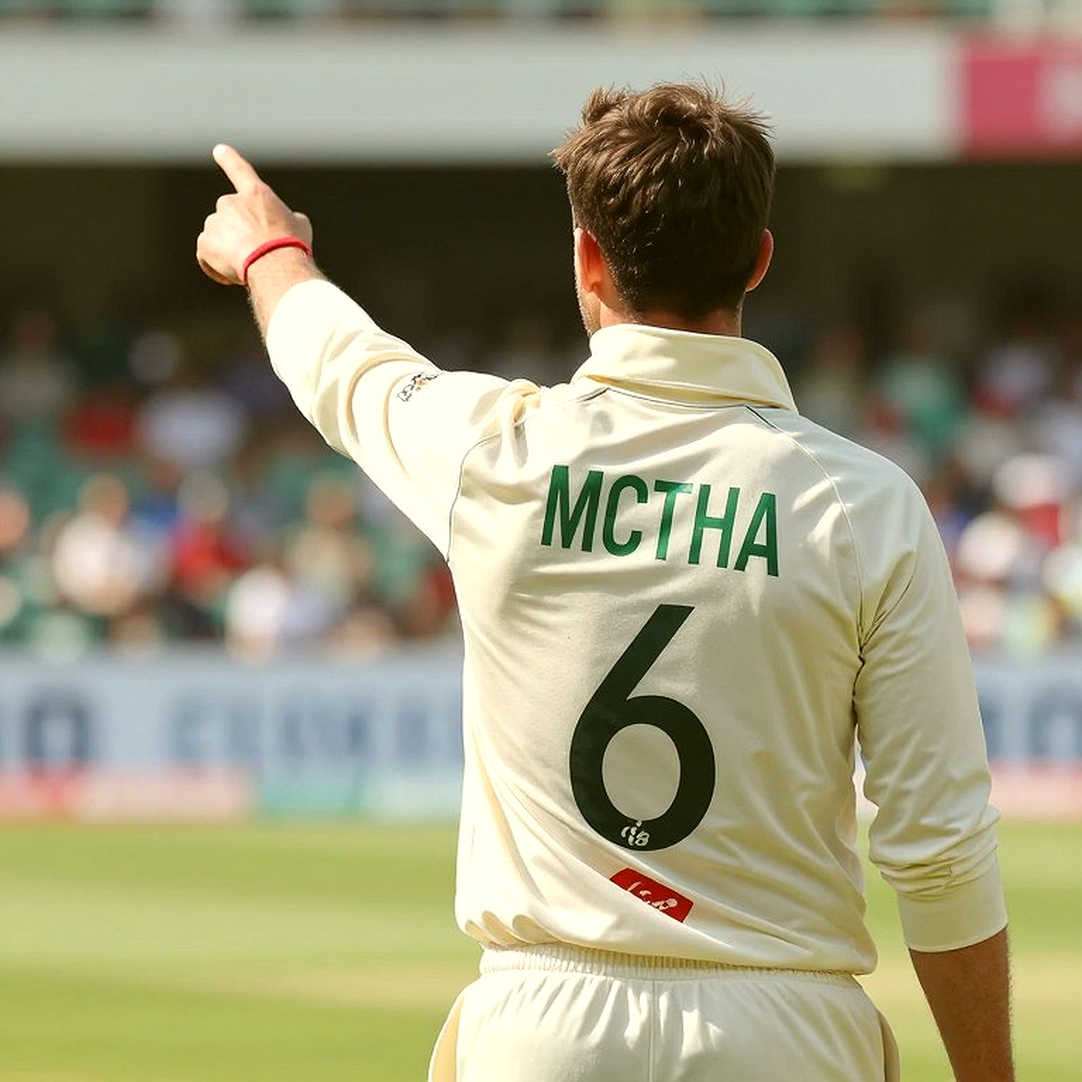
Inglis only learned he was playing when he arrived at the ground, after Steve Smith withdrew with a neck injury. In his own words, it was not ideal preparation. That is the most important aspect of the innings — this is not the innings of a chosen player but of a contingency. The right question is not 'has Inglis arrived?' but 'what does it say that Australia's reserve batter made a hundred in a series decider?' That is a verdict on the system's depth, not a selection ruling on the individual.
Alex Carey made 80. Australia are running two wicketkeeper-batters in the same XI, and together they supplied roughly 180 of the 429. This is a genuine structural advantage: Inglis is not carrying the keeping workload, so his value is currently being priced purely on his batting. It also carries a cost — the moment Smith is fit, three batters will be competing for two places, and that debate will dominate the coverage within days of the match ending.
Australia's innings terminated in the morning session. Inglis was candid that the side should have added more runs, suggesting another 50 at least, and that a big total was needed. That is not modesty; it is an accurate self-assessment, and it matters. Translated: the last five wickets yielded comparatively little, so the lead stopped at roughly 100 instead of the plausible 150-170. On a surface that will deteriorate, those 50-70 runs are worth disproportionately more in the fourth innings than the raw number suggests.
Marques Ackerman made 62 and captain Temba Bavuma 35, and both fell in the final session of the day. That was the decisive passage of the match. The pair were batting well and building; had they survived, South Africa's lead would have been heading towards 80-100 rather than 40. Inglis described the session as Australia having 'controlled the tempo' — the correct phrase. Not dominated. Controlled.
The most forward-looking signal for Australia came from Nathan Lyon. In Inglis's words, Lyon bowled brilliantly and looked threatening the whole time. That is a first-person assessment from the opposing camp, not a data point — no wicket or economy figures are available. But if a spinner is threatening on day three, days four and five tilt towards the bowling side.
On the pitch itself, Inglis's read is that it was a really good wicket. The surface is still good for batting while offering the spinner grip — a classic day-four/five deterioration curve rather than a lottery. Newlands also has a documented history of collapses, though transferring that history directly to this surface would be a mistake. On current evidence, a target of 200-230 would be a genuine contest, not a formality.
The follow-on question never arose. A five-day Test requires a 200-run first-innings lead to enforce it, and Australia led by 100. South Africa batting again was mandatory under the playing conditions. This needs to be stated clearly because post-match coverage often suggests Australia 'declined' or 'considered' the follow-on — both would be factually wrong. No such option existed.
Inglis's own heuristic is the closest thing to a risk model in this match. His view that anything over 200 could be tricky batting last implies that if South Africa's remaining six wickets add 150, the match is squarely in the balance. Australia's top order is experienced, but batting last against an older ball on a turning surface is never comfortable. On that basis the game is closer than the 100-run lead implies.
Smith's neck injury is not a match-level footnote. Neck and back complaints in a batter past 35 have a documented tendency to recur, and this may extend beyond this Test. The immediate effect is that Australia will field in the fourth innings without their most experienced slip fielder — precisely in the innings where catches decide matches. Treat this as a primary concern, not a footnote.
South Africa's problem is not bowling; it is batting. On a surface both camps describe as good for batting, in a must-not-lose innings, they reached stumps at 140 for 4 in reply to 429. Two set batters falling in the final session is the symptom of a conversion problem, not its cause. The pattern is familiar: good starts that do not become big scores. Bavuma's 35 anchored the innings but needed to become more.
Weather is an entirely un-priced variable. There is no forecast information in the source, and if two days are lost to rain, a draw becomes a live third outcome. Any expectation should be formed only after consulting a local Cape Town forecast.
It should also be stated plainly that this report carries no toss result, no over counts, no DRS incidents and no pitch report. None of the analysis above invents them. What the available information supports is this: Australia are favourites with meaningful residual risk. Not 'Australia closing in on victory' — 'Australia ahead, with the game still open.'
Three things to watch. First, South Africa's sixth-wicket partnership on day four — if it passes 60 runs or the lead passes 150, the match opens up. Second, Lyon's day-four figures — three wickets would make Australia clear favourites. Third, Smith's fitness — his availability for the next assignment should be treated as unconfirmed until medically cleared.

संबंधित खिलाड़ी
अनुशंसित
Surrey's Head Coach Took an Assistant's Chair in Chennai — That's the Real Story2026-10-28
Konstas's 151*: A 90-Strike-Rate Innings That Must Answer for Its Error Bar Before Its Test Verdict2026-10-30
Nayeem Hasan's 4/33 and Bangladesh's 79/6: Why a 106-Run Lead Is Not a Win Yet2026-10-30
Blank Fields, False Comfort: Why 'No Risk Found' and 'Risk Never Assessed' Are Not the Same Thing2026-10-30
Nayeem Hasan's 4/33 and Bangladesh's spin axis: hosts are not 'safe' despite a 106-run lead2026-10-31
S Meghana: The Retirement at 30 That Form Didn't Write — the Selection Funnel Did2026-10-29
Babar Azam’s 118 Runs, Zero Fifties and Pakistan’s ‘No Concern’ Briefing: A Scorecard Audit2026-10-28
The Man at the Gate: What an Empty Cricket Record Really Costs the Information Chain2026-10-30
अनुशंसित
The Empty Payload: What Cricket's Evidence Docket Left Blank2026-10-25
Uthappa as Mumbai Indians Batting Coach: 205 Matches of Experience, 14 Matches of Evidence, One December 16 Deadline2026-10-30
Sri Lanka Cricket: The Bill Has Not Been Read Yet, and the Hosting Invoice Is Already Paid2026-10-28
Konstas's 151*: A 90-Strike-Rate Innings That Must Answer for Its Error Bar Before Its Test Verdict2026-10-30
What the Scorecard Never Records: The Cricket Beat's Incomplete Archive2026-10-24
The Transfer Window's Costliest Mistake: Filling a Blank Column With a Guess2026-10-30
Toss Logged, Score Missing: Auditing the Record for Brisbane Heat vs Sydney Sixers, WBBL Match 32026-10-30
England Lost From 429 and From 154/9 — The Fault Isn't Temperament, It's the Last Ten Overs2026-10-27
अनुशंसित
Konstas's 151*: A 90-Strike-Rate Innings That Must Answer for Its Error Bar Before Its Test Verdict2026-10-30
The Analysis of Nothing: Why “No Story” Is the Most Expensive Lie in a Cricket Newsroom2026-10-27
Four Tests, 48 Points and One Percentage: The Receipts Behind Shanto's 'No Pressure' Line2026-10-28
October at Newlands: Where the Calendar Won the Toss Before the Pitch Did2026-10-28
Mirpur Test: Four Empty Lineups, a Dry Pitch and the Silence Before the Toss2026-10-30
Nortje Out, Coetzee Back: The One South Africa Change the Scorecard Will Not Show2026-10-27
The 9:30 AM Fixture at Conaree: What England Lions' Unofficial Tour Can Prove, and What It Can't2026-10-30
Four Stories, Not One Number: Auditing 'The Scoop' Episode Teaser2026-10-25