
The Shifting Architecture of Asian Cricket: The Crisis Behind the Scoreboard
Asian cricket's structural pressures stem from one cause: T20 generates most of the revenue while Test cricket carries most of the prestige, and both draw on the same players, calendar and governing bodies. Key issues are (1) workload accumulation for multi-format players, especially fast bowlers, driven by league and international calendar collisions; (2) format specialisation weakening the technical depth needed for the long format; (3) uneven domestic structures, with India's scale producing depth but also inequality, Pakistan producing volume but weak conversion systems, and Sri Lanka relying on school cricket; (4) women's cricket constrained primarily by economics rather than talent, with leagues the decisive unlock; (5) associate nations like Nepal and the Gulf states expanding reach but lacking structural continuity; (6) governance questions over scheduling power and revenue distribution among large and small boards. The proposed remedies are centralised workload measurement, domestic expansion that protects first-class cricket, and greater transparency and smaller-member participation in governance.
The centre of cricket's global economy has moved decisively to Asia. India, Pakistan, Bangladesh, Sri Lanka and Afghanistan now command the largest share of the sport's audiences, broadcast rights and sponsorship money, and the Gulf states are no longer merely a migrant-community market. But behind that dominance sits a second story that never appears on a scoreboard: the story of the sport's internal architecture, where calendar, format, workload and administrative authority are colliding with one another.
The collision is not new, but it has sharpened. Cricket's money now flows through T20, while its prestige is still organised around Test cricket. Fitting both into one calendar is becoming harder each year, and when the fit fails, the cost is almost always transferred to the least organised party in the room: the player.
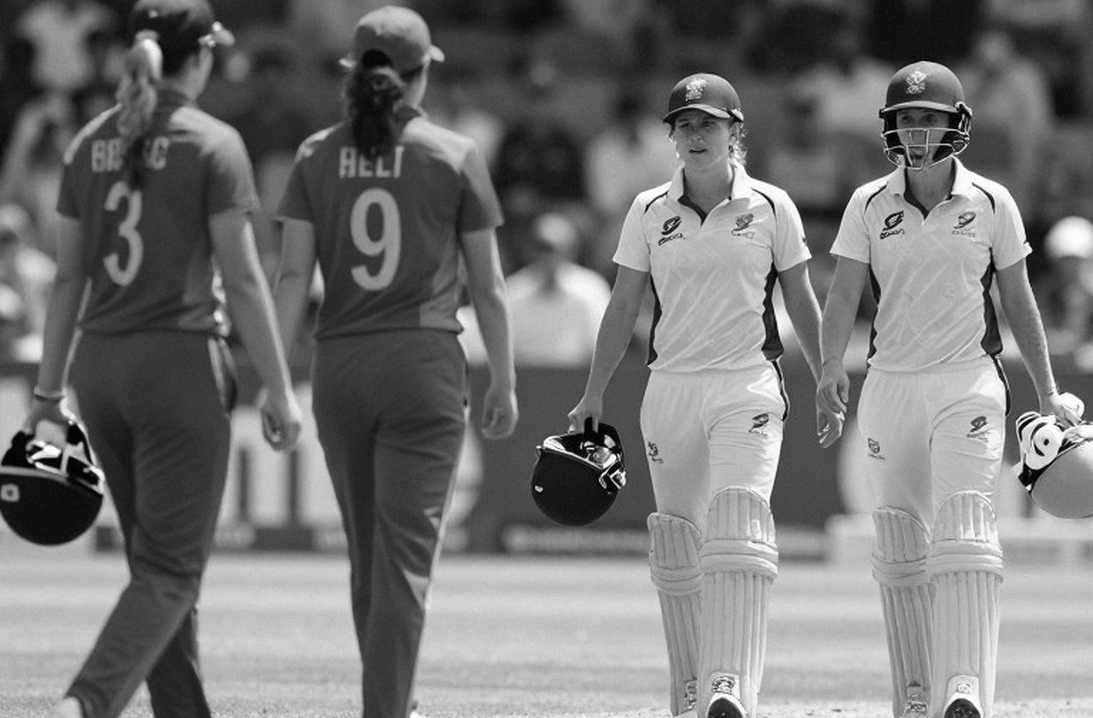
Three formats, one calendar. Cricket is unusual among major sports in sustaining three viable formats at once. Tests carry the oldest tradition and the hardest technical demands. One-day cricket made the game a mass spectacle at the end of the twentieth century. T20 has rewritten its economics in two decades. Each has its own audience, its own commercial logic and its own politics of prestige. The problem is that all three depend on the same player pool, the same calendar and the same governing apparatus. A player who operates across all three must absorb three different technical preparations, three different mental states and three different physical loads — and that load accumulates quietly across seasons before it shows itself in a single breakdown.
The commercial argument is straightforward. T20 delivers more advertising, more ticketing and more digital engagement per hour than anything else. Broadcasters pay the most for it, and boards find it the easiest revenue. But the same logic produces an imbalance: the format that earns the most also demands the most calendar space, so scheduling is decided by revenue argument first and playing quality accounted for later.
The league boom and its price. Over two decades nearly every major Asian board has launched a domestic T20 league, and the benefits are real. Players gained financial security, domestic talent gained a stage, and the game reached new markets. Players who once spent years in domestic cricket without approaching national selection suddenly had an alternative route. That is not a small achievement — it is the basic precondition of a professional sport that talent can make a living.
But there are consequences that receive less attention. First, league calendars now collide with international calendars, forcing players into choices between career security, contract terms and national duty. Second, the leagues have concentrated demand on a small group of names, so the same bodies wear down fastest where they are most needed. Third, and least discussed, the league's pull is draining attention from first-class cricket. The technical discipline that long-format cricket builds — patience, footwork, reading bounce — is precisely what separates players at the highest level. Weaken the domestic long format and the deficit surfaces a decade later at international level, by which time it is far more expensive to fix.
The debate is usually framed badly, as though the question were whether leagues are good or bad. The real question is how workload will be divided between leagues and national teams, and where the player's voice sits in that negotiation. Player associations remain weak across most of Asia, so that voice is often simply absent. Where the money in a sport grows sharply, accountability should grow with it — and it has not visibly done so.
Workload: the problem with no scoreboard. Cricket's competitive load is continuous. A Test match runs five days and a lapse in concentration is the defining error. A T20 runs three hours but demands a decision on every ball at high intensity. Alternating between the two, repeatedly, imposes stress on body and mind alike. Travel between tours, time-zone shifts, reduced practice time and insufficient recovery together create a cycle of injury and fatigue that no single match can undo.
Fast bowlers carry the heaviest visible cost. Pace bowling is the skill with the largest physical investment and the longest recovery window, and switching formats changes both mechanics and effort levels — the most common source of injury. In Asia this is compounded by climate and pitch conditions: bowling long spells in heat and humidity, or fielding through daylight sun, are factors rarely priced into recovery planning.
Format specialisation is the route both boards and players are exploring, and it is a normal development in professional sport. In cricket it has a price: specialisation can erode the technical depth that Test cricket requires. The reverse is also true — some players still want to play all three formats and treat that as part of their identity, but their number is shrinking. When the best players pick a format, that format's standard rises at others' expense and an underlying inequality takes hold inside the game.
The base of the pyramid. Long-term strength lives in the lower structure, and that is where Asian countries diverge most. India's domestic apparatus is vast — state competitions, age-group tournaments and a growing private academy sector. Scale gives depth, which smaller systems cannot replicate.
But scale also brings inequality. Resources pool in a few centres, economic background determines the quality of coaching and nutrition a young player receives, and talent from distant regions is lost before it is ever seen. That is a social problem rather than a cricketing one, but cricket cannot ignore it: talent that never reaches a platform is a loss no scoreboard records.
Pakistan's story is different. Street and neighbourhood cricket is deeply embedded, and the fast-bowling tradition is strong enough that new names keep emerging. The problem is structural. Talent emerges in volume, but the system for converting it into durable careers — scientific coaching, physiotherapy, recovery support — has been weak. The result is a pattern of explosive starts without longevity, where injury, inconsistent selection and domestic instability make continuity the scarcest resource.
Sri Lanka's great asset has been school cricket, an efficient model for a small country because school competitions build wide participation at low cost and embed the game in social life. Recent economic pressure and the departure of leading players into league markets have added strain. When the best players appear less often domestically, the standard of those competitions falls and the next generation meets a weaker challenge than the one that produced its predecessors.
Bangladesh has grown the game's popularity quickly, but converting early enthusiasm into consistent output remains the central challenge. When the performance baseline differs between domestic teams and the national side, selection itself becomes unstable — and players who cannot read the selection logic stop taking risks, which caps their development.
Afghanistan is a category of its own: a national project that reached international level on very limited resources, carried largely by players' self-discipline and by circular migration through neighbouring domestic systems. The game became a symbol of identity and gave talent exceptional motivation. But the limits of the domestic base — few international matches, limited training infrastructure, political instability — remain part of the system. The Afghan lesson is that motivation can substitute for resources, but only up to a point.
Women's cricket: the fastest shift. The most under-measured part of Asian cricket is the women's game. India has moved fastest and the effect has spread across the region, with Bangladesh and Sri Lanka reaching competitive levels within a relatively short period.
The binding constraint is economic. Where broadcast and sponsorship are thin, players cannot treat the game as a full-time career — and full-time commitment requires financial security, not as a favour but as the precondition of professionalism. Once personal financial security exists, performance levels rise quickly, as the men's game demonstrated decades earlier.
Leagues have been decisive here. When a private women's league structure appeared, players emerged who had been competing domestically without visibility. The lesson is direct and applies equally to smaller cricket nations: talent is rarely absent, it is merely unplatformed.
The smaller boards. Some of Asian cricket's most interesting development is in countries routinely treated as minor. Nepal, Oman, the UAE, Hong Kong, Malaysia and Singapore have all expanded in the past decade. Their value lies less on the field than in extending the game's reach.
Nepal is the clearest case. Public appetite for cricket has never been in doubt, and engagement has been remarkable despite limited domestic infrastructure — a market that formed before the structure arrived, which is a risky order of events. The Gulf model is different again: policy support, international-standard facilities and a large migrant population. It produces results and infrastructure, but the depth of local player development remains an open question, because a system built on a transient population struggles with continuity.
Climate, pitches and scheduling. A technical dimension of Asian cricket is under-discussed: climate and pitch character. Humid subcontinental heat, daylight sun and a monsoon-shaped calendar all shape how the game is played. For bowlers this climate is an added load; for batters it is an endurance test. Scheduling rarely prices these factors in, though they bear directly on recovery and performance.
Pitch diversity is a second factor. Conditions suited to spin built an entire strategic tradition, but recent years show a drift toward batter-friendly surfaces and smaller grounds. The immediate gain is excitement; the long-term cost is that the craft of bowling is devalued and the balance of the contest shifts.
Data: applied where it is easy, not where it matters. Analytics is now standard in team preparation, and rightly so. Data helps estimate injury risk, opponent weakness and player fatigue. But in Asian cricket its dominant use remains match strategy. Workload management and injury prevention are where the largest gains are available and where adoption is thinnest. Central measurement of a player's total bowling load, total travel and recovery time is not technically difficult; it is a question of institutional will.
Governance: how power is divided. The central administrative question is how authority is distributed. The influence of the largest boards is a natural consequence of market size, and it shapes both scheduling and revenue distribution. That influence is not inherently harmful — without large markets, smaller members would receive little revenue at all — but the demand for transparency must scale with it, because without transparency influence and undue advantage become indistinguishable.
Bilateral series and multilateral tournaments have become competitors. For a large board, bilateral cricket is more profitable because revenue-sharing is simpler; for a smaller board, a multilateral tournament offers more opportunity. The imbalance shows up in the competitive diversity of the sport, and that diversity is what keeps it alive.
The future of Test cricket is the most fragile part of this argument. Test series between major nations still draw attention, but the format is not financially sustainable for smaller countries, and in several places the habit of playing Tests has become rare. When opportunity is unequal within a format, the meaning of the game changes: it stops being a contest and becomes a question of ranking and access.
Audiences and the attention economy. Media and audience behaviour deserve equal weight. Attention now clusters around short clips, statistics and personal brands. That has popularised the game and widened players' reach, but it has narrowed space for the slow, long, complicated side of cricket. A spectator who watches a five-day Test understands the sport differently — as a game of strategy, patience and balance. That experience is not in competition with T20's intensity. Both have their place; both need room.
The way forward. Three questions will define Asian cricket's next decade. First, workload: how much a player can play in a year and how much rest is owed. Second, domestic structure: expansion that gives both leagues and first-class cricket room, so short-term revenue and long-term quality do not cancel each other. Third, governance: transparency and genuine participation for smaller members, so the game's footprint widens rather than narrows.
None of these will be answered on the field. They will be answered in meetings, in calendar planning, and in making room for the player's voice. Whenever cricket has done this historically, standards have risen and audiences have returned. When it has not, the largest cost has fallen on the people who only wanted to watch a good game. Asian cricket has an opportunity this generation did not inherit — but opportunity carries responsibility, and that responsibility belongs to the whole ecosystem, not only to the largest boards.


संबंधित खिलाड़ी
अनुशंसित
Why Lancashire Let James Anderson Go: 50 Wickets, No Average, and a Very Brief Meeting2026-10-30
Jansen's Double No. 1, Abhishek's Return: The Rankings Changed on Monday, the Calendar Broke Six Months Earlier2026-10-29
Najmul Hossain Shanto's restraint: Final is far away, Sylhet Test not in thoughts, West Indies first2026-10-28
The cricket_asia Empty Ledger: 22 Data Points, Zero Cricket, and the Gate That Never Closed2026-10-27
Jansen Tops Two Tables, Abhishek Returns to No. 1 in T20Is: A Full Read of the ICC Rankings Update2026-10-29
110 in 25.3 Overs: The Floor Plan of Lahore's Collapse, and the Cause the Report Left Out2026-10-28
India A and Pakistan A in Same Group: 22 November Clash, but the Real Test at the Rising Asia Cup Is Schedule and Net Run Rate2026-10-30
The Blank Cell Beside 113: India A's 24-Run Lead and a Scorecard That Won't Say Why2026-10-29
अनुशंसित
A Fifty in 14 Balls: The Real Number Behind 199 Isn't the One in the Headline2026-10-28
Mirpur, Day 3: The Four-Wicket Truth Hidden Behind a 106-Run Lead2026-10-31
Asia Cup in Qatar's Silence: Bangladesh A's Road and the Echo of 22 November2026-10-30
The First Evening at Mirpur: The Unfinished Truth Tucked Inside Shadman's 992026-10-29
The Empty Ledger: Indian Cricket's Record That Was Never Written Down2026-10-31
Empty File, Filled Scoreboard: Why the Stage-1 Report Returned Zero Data2026-10-25
Labuschagne's Duck, the 48-Innings Drought, and Australia's Real Test at Newlands2026-10-29
The Hollow Shell of Cricket Analytics: When a Filled Template Hides an Absence of Facts2026-10-31
अनुशंसित
The Bowler Can Control the Game: Bhuvneshwar Kumar's Claim and the Record That Was Never Printed2026-10-28
The Shifting Architecture of Asian Cricket: The Crisis Behind the Scoreboard2026-11-01
Hong Kong Sixes 2026: Pakistan Chase 89 in Six Overs as Krunal Pandya's 31-Run Over Shrinks India's 882026-10-30
The 94-Run Powerplay: India's Grip, New Zealand's Open Book and Vaibhav Sooryavanshi's First Examination2026-10-25
The Framework of South Asian Cricket Coverage: From Empty Analysis to a News Story2026-10-31
Christchurch's 'Thriller' and an All-Rounder Built on an Adjective: Auditing Irfan Pathan's Endorsement of Nitish Kumar Reddy2026-10-26
Ashiqur Zaman's Return: A Spine, an Elbow, and the Most Uncertain Bet in a Brand-New Tournament2026-10-28
From an Empty Feed to a Full Page: The Discipline of Verification in Cricket's Rumor Economy2026-10-29