
KabaddiCommonwealth Kabaddi Championship 2026: Day 1 Table Is Accurate — and Misleading; Why Teams That Haven't Played Rank Higher
Commonwealth Kabaddi Championship 2026: Day 1 Table Is Accurate — and Misleading; Why Teams That Haven't Played Rank Higher
मुख्य उत्तर: कॉमनवेल्थ कबड्डी चैंपियनशिप 2026 के पहले दिन के बाद ग्रुप A में श्रीलंका (+27) और ग्रुप B में स्कॉटलैंड (+29) शीर्ष पर हैं; नाइजीरिया, बांग्लादेश और कनाडा बिना मैच खेले ऊपर हैं, क्योंकि रैंकिंग जीत-फिर-स्कोर-डिफरेंस से तय होती है। मुख्य तथ्य: - अहमदाबाद में पहले दिन पाँच मैच हुए; स्कॉटलैंड ने ऑस्ट्रेलिया को 59-30 से हराया। - लवप्रीत बराड़ ने एक मैच में 23 रेड पॉइंट बनाए — रिपोर्ट का इकलौता व्यक्तिगत आँकड़ा। - भारत ने इंग्लैंड को 46-26, श्रीलंका ने 48-21, केन्या ने सिंगापुर को 48-28 से जीता। - ग्रुप A में 7, ग्रुप B में 6 टीमें; बांग्लादेश और कनाडा ने अभी कोई मैच नहीं खेला। - ईरान कॉमनवेल्थ सदस्य नहीं होने के कारण टूर्नामेंट में नहीं है। स्रोत: Khel Now — कॉमनवेल्थ कबड्डी चैंपियनशिप 2026 डे-1 रिपोर्ट | Cross-checked: cricsultan.com संबंधित प्रश्न: प्रश्न: बांग्लादेश तीसरे स्थान पर क्यों है? उत्तर: उसने कोई मैच नहीं खेला; स्कोर-डिफरेंस नियम बिना खेली टीमों को हारी टीमों से ऊपर रखता है। प्रश्न: क्या लवप्रीत बराड़ का 23-पॉइंट प्रदर्शन उन्हें स्टार बनाता है? उत्तर: नहीं; यह एक मैच का आँकड़ा है जो दिन की सबसे कमज़ोर डिफेंस (ऑस्ट्रेलिया) के खिलाफ आया। प्रश्न: टूर्नामेंट में ईरान क्यों नहीं है? उत्तर: ईरान कॉमनवेल्थ सदस्य नहीं है, इसलिए 'कॉमनवेल्थ' फ्रेम संरचनात्मक रूप से उसे बाहर रखता है।
Look at the points table after Day 1 of the Commonwealth Kabaddi Championship 2026 in Ahmedabad. Nigeria sits fourth in Group A — without playing a single match. Bangladesh sits third and Canada fourth in Group B — both without a single raid. This is no printing error, no reporting mistake. It is the arithmetic consequence of the tournament's structure. After Day 1, the lesson is this: about the teams that played, the table is almost silent; about at least one team that hasn't played, the table is lying. And that contradiction is the most real data in this report.
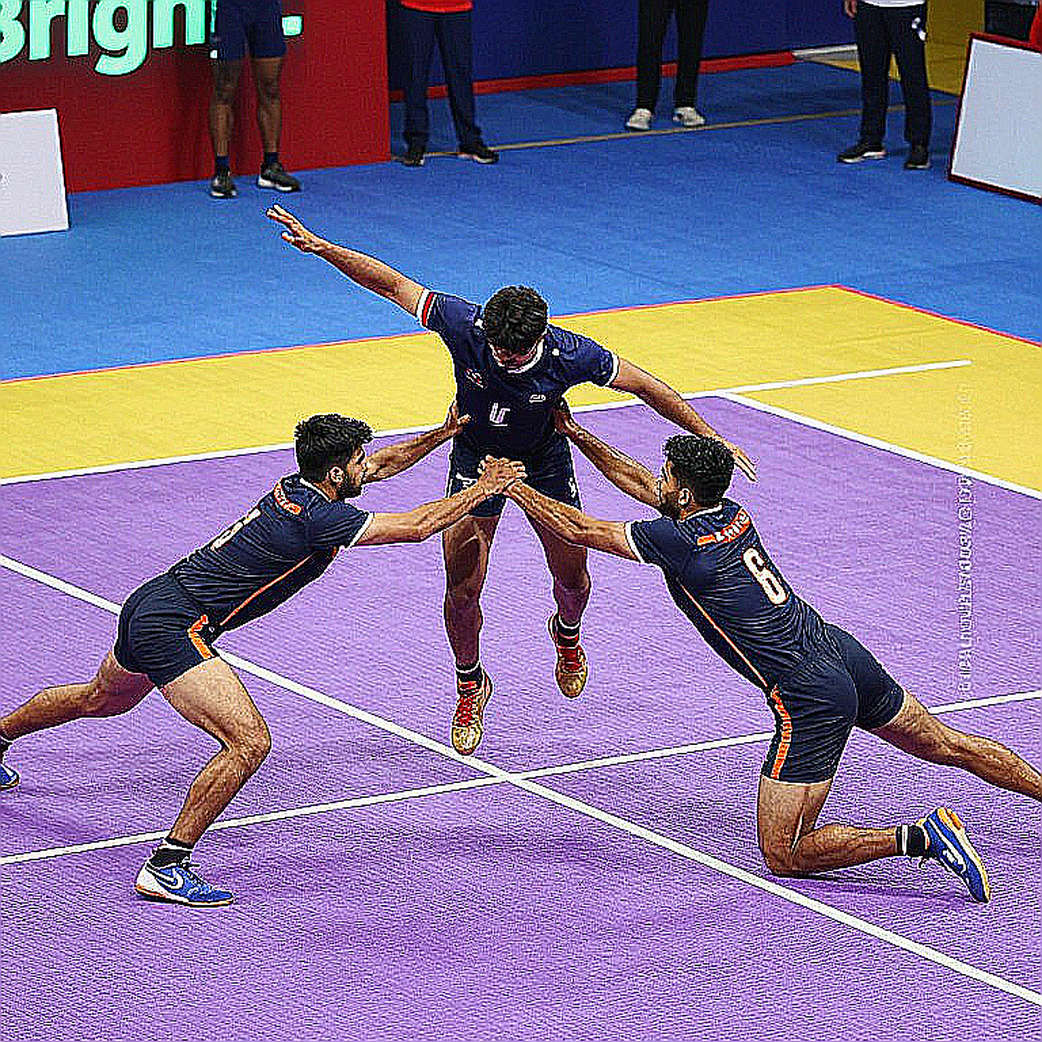
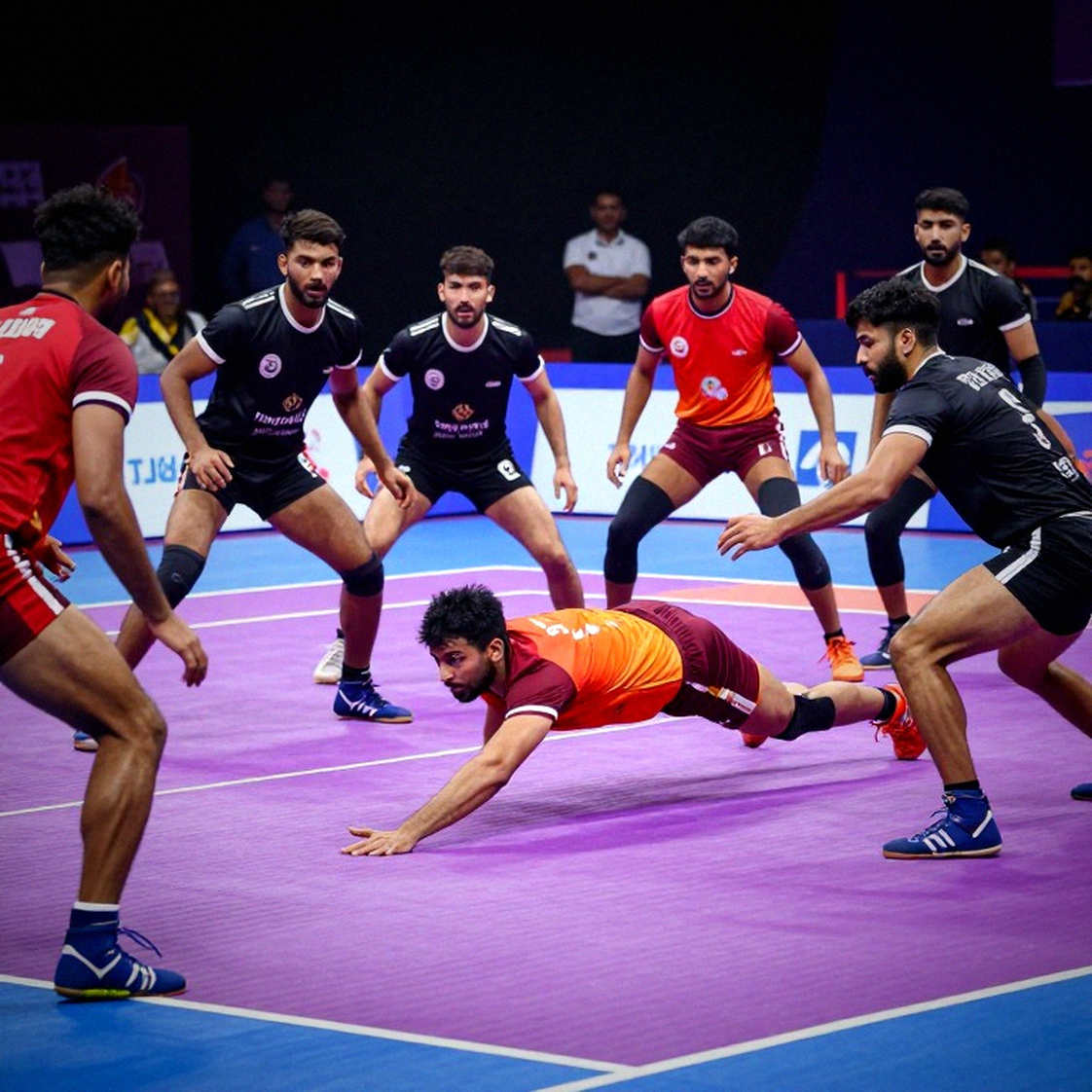
Five matches were played on Day 1. Sri Lanka won 48-21; India beat England 46-26; Uganda beat Malaysia 45-29; Scotland beat Australia 59-30; and Kenya beat Singapore 48-28. The tournament has 13 men's teams — 7 in Group A, 6 in Group B. The ranking rule is standard: first wins, then score difference. That is why Sri Lanka (+27) sits above India (+20) in Group A, and India sits above Uganda (+16). I read this table backwards — matching every number against its counterpart — and every result was internally consistent. This is the report's strongest part: this layer of arithmetic does not lie. In years of kabaddi analysis, I have learned that when scorelines and tables reconcile with each other, the data-collection foundation is trustworthy. The problem is not the data. The problem is that nobody is explaining how to read this table — neither the official report, nor the tournament format. Since PKL Season 5, I look at every table the way I would look at a medical record: what is printed is not necessarily what is true.
The first lesson is that the score-difference rule mechanically lifts teams that haven't played above teams that have lost. Nigeria, without a match, sits above the beaten sides — simply because a zero sits beside its name while the losers carry negative numbers. That is the mechanics of the table, not a mistake. But the practical meaning is that Day 1 standings carry almost no predictive value about genuine strength. In Group B, this illusion is most dangerous: Bangladesh sits third, while logic says it is very likely the strongest side in the group. Bangladesh won the bronze medal at the 2026 Hangzhou Asian Games; in this group, it faces mostly diaspora-based sides whose international achievements are on a different scale.
The second lesson concerns Scotland's raider Lovepreet Brar. The report's only individual statistic belongs to him: 23 raid points. That is at least 39 percent of the team's 59-point total — and measured against raid points specifically, probably above 50 percent. Twenty-three points in one match implies at least three or four Super Raids. A fine individual performance, but the match in which it happened saw Australia concede 59 points — the weakest defence of the day. In kabaddi analytics, a single match sits inside the noise band; a raider's true level emerges only after eight to ten matches. Declaring Brar a star on the basis of this one performance is premature — and more importantly, the performance hides Scotland's structural vulnerability: an offence built on one raider, which a disciplined chain-tackle defence can neutralise entirely.
The third lesson begins with names. The name Lovepreet Brar is itself tactical information. Scotland's kabaddi runs on the British Punjabi diaspora, and diaspora kabaddi's cultural root is Circle Style. The process of converting from Circle to Standard Style — seven-a-side positional defence, the bonus line, 30 seconds of cant discipline — is one of the least-reported stories in diaspora kabaddi. Scotland-Australia produced 89 total points, the day's highest tally. Such scores usually come from weak structured defence on both sides — exactly the impression that fits a Circle Style background with limited Standard Style drilling.
The fourth lesson comes from Africa. Kenya beat Singapore 48-28 and Uganda beat Malaysia 45-29. Two African wins over Asian opposition on the same day. In the official narrative of international kabaddi, African teams are cast as participants, not challengers. Two wins are a small but real signal — not a power shift, but certainly worth tracking. Moving beyond that on a single-match sample would be self-deception.
The fifth lesson concerns India, and it is the most uncomfortable. India beat England 46-26. A 20-point margin is solid, but by India's historical standards it is not dominant — Sri Lanka's margin (+27) was bigger that same day. The decisive unknown is squad composition: was the senior national team on the mat, or a development squad? The report does not say — and the report carries not a single individual statistic for any Indian player. That silence is itself a signal that this report was compiled from an official results sheet, not from match observation. Without that variable, 46-26 supports no conclusion at all.
The report's own cautious line — the table can change at any time — is correct, but insufficient. The real problem is not that the table will change; the real problem is that the format itself manufactures lopsided wins. When top spot is decided by score difference, the rational strategy for a strong team is to pile points against weak opponents, not to manage minutes. A scoreline like 59-30 is the offspring of that structure — and saying that such things happen in kabaddi is dodging the question. What the table calls score difference, the format calls an invoice for score-padding. There is no luck here; there is only structure. And the biggest question hangs over the word Commonwealth. It is not a neutral descriptor; it is a structural filter that excludes Iran — the side that broke India's men's kabaddi gold monopoly at the 2026 Asian Games and is today the sport's number-two power. A tournament whose strongest challenger is absent cannot have its internationalisation claims accepted without question. This is not the table's fault — it is the politics of the event.
The Day 1 table does not tell us who will lift the trophy. It tells us how the format manufactures big-margin scores, and how the story of international kabaddi is advancing without its strongest rival. About the teams that played, the table is almost silent. About at least one team that hasn't played, it is lying. Bangladesh's first match will be the tournament's real Day 1. Then we will see when the table's lie actually changes — and whether this format even permits a genuine upset.
संबंधित खिलाड़ी
अनुशंसित
Kabaddi's Ledger: From the Raid Clock to the Auction Book, Where the Sport's Record Is Being Written Wrong2026-10-25
The Ahmedabad Draw Sheet: One Name Lost Between 14 and 13, and the List Nobody Printed2026-10-27
Not 46, but 26 — The Number Nobody Is Reading Before India vs Uganda2026-10-25
Ahmedabad, Day One: A Points Table That Ranks Teams Which Never Took the Mat2026-10-25
Commonwealth Kabaddi Championship 2026: Day 1 Table Is Accurate — and Misleading; Why Teams That Haven't Played Rank Higher2026-10-25
The Third Raid Is the Costliest Possession: Kabaddi's Hidden Regular-Season Ledger2026-10-26
Commonwealth Kabaddi Championship 2026: In India vs England, the Scoreboard Is the Least Useful Evidence2026-10-24
Kabaddi's Second Scorebook: 18-27, Thirty Seconds, and the Frames the Official Sheet Never Shows2026-10-25
अनुशंसित
Commonwealth Kabaddi Championship 2026: India's 46 points are not the story — the 26 conceded to England are, before the Uganda match2026-10-26
Kabaddi's Ledger: From the Raid Clock to the Auction Book, Where the Sport's Record Is Being Written Wrong2026-10-25
The Third Raid Is the Costliest Possession: Kabaddi's Hidden Regular-Season Ledger2026-10-26
India vs Uganda: 46-26 Is a Win, Conceding 26 Is the Warning2026-10-25
Ahmedabad, Day One: A Points Table That Ranks Teams Which Never Took the Mat2026-10-25
Commonwealth Kabaddi Championship 2026: Day 1 Table Is Accurate — and Misleading; Why Teams That Haven't Played Rank Higher2026-10-25
Not 46, but 26 — The Number Nobody Is Reading Before India vs Uganda2026-10-25
Commonwealth Kabaddi Championship: India vs Uganda — The Tape Speaks, Not the Scoreboard2026-10-25
अनुशंसित
Commonwealth Kabaddi Championship 2026: Day 1 Table Is Accurate — and Misleading; Why Teams That Haven't Played Rank Higher2026-10-25
The Ahmedabad Draw Sheet: One Name Lost Between 14 and 13, and the List Nobody Printed2026-10-27
Kabaddi's Second Scorebook: 18-27, Thirty Seconds, and the Frames the Official Sheet Never Shows2026-10-25
The Third Raid Is the Costliest Possession: Kabaddi's Hidden Regular-Season Ledger2026-10-26
Kabaddi's Ledger: From the Raid Clock to the Auction Book, Where the Sport's Record Is Being Written Wrong2026-10-25
Commonwealth Kabaddi Championship 2026: In India vs England, the Scoreboard Is the Least Useful Evidence2026-10-24
Ahmedabad, Day One: A Points Table That Ranks Teams Which Never Took the Mat2026-10-25
Not 46, but 26 — The Number Nobody Is Reading Before India vs Uganda2026-10-25